When Midnight Becomes a Business Requirement: Breaking Free from Batch-Constrained Architecture
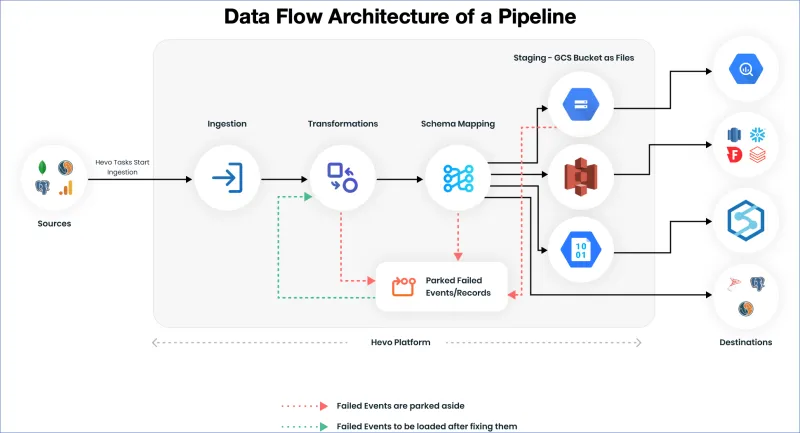
Photo: data pipeline streaming architecture server infrastructure night, via res.cloudinary.com
Every engineering organization has a version of this story. A system was built five years ago to process end-of-day transactions, generate nightly reports, and synchronize records across platforms during off-peak hours. It worked well. Then the business changed. Stakeholders began asking for dashboards that updated in minutes rather than hours. A new product feature required event-driven notifications. A compliance requirement mandated near-real-time audit trails. The engineering team, under pressure to deliver, began bolting real-time expectations onto infrastructure that was never designed to carry them.
The result is a category of system that JFDP Labs encounters regularly in the field: technically operational, deeply fragile, and maintained by engineers who have learned to treat the 2:00 AM alert as a professional hazard rather than a design failure.
The Architecture of a Slow Emergency
Batch processing is not an outdated paradigm. For workloads that are genuinely periodic in nature — payroll runs, monthly billing cycles, large-scale ETL jobs with known windows — it remains an entirely appropriate architectural choice. The problem arises when batch infrastructure is asked to approximate real-time behavior through increasingly aggressive scheduling.
The progression is familiar. An hourly batch job is introduced to reduce the latency of a nightly process. Then a fifteen-minute job is added to reduce the latency of the hourly job. Then a five-minute polling loop is layered on top of that. Each increment is a reasonable local optimization. The aggregate result is a system that runs near-continuously, consumes resources as though it were a streaming architecture, and retains all of the operational complexity of a batch system — including the failure modes that come with processing large, accumulated state changes in a single transaction.
When these systems fail, they fail in proportion to the size of the batch, not the size of the individual event. A bug that would cause a single-event failure in a streaming system causes a multi-hour outage in a batch system because the failure must be diagnosed, the batch must be replayed or reconstructed, and the downstream dependencies must be reconciled against the interrupted state.
Recognizing the Warning Signs
Several architectural signals indicate that a batch-based system is approaching the limits of what incremental optimization can address.
Shrinking batch windows. When the scheduled processing interval has been reduced multiple times in response to latency complaints, the system is being asked to behave like a stream while being architected like a scheduler. Each reduction in interval increases resource contention and reduces the margin available for error handling and retry logic.
Stateful job interdependencies. Batch jobs that cannot run independently — because each job depends on the output state of the previous one — create sequential failure chains. A single job failure does not just delay one process; it delays every downstream process that depends on it, compressing multiple failures into a single incident window.
Manual intervention as a standard operating procedure. When runbooks include steps like "if the job fails, manually trigger the reconciliation script" or "check the lock table before restarting," the system has exceeded the complexity threshold that automated operations can reliably manage. These runbooks are a documentation of architectural debt, not a permanent operational strategy.
Growing reconciliation overhead. Systems that process accumulated state must reconcile that state against downstream consumers. As data volume grows and downstream integrations multiply, the reconciliation step consumes an increasing share of the available processing window. When reconciliation begins to compete with the primary processing job for resources or time, the system is signaling that its design is no longer compatible with its workload.
Migration Without Reconstruction
The instinctive response to a system that has outgrown its architecture is to rewrite it. This instinct is almost always wrong, not because rewriting is never appropriate, but because it is rarely the fastest path to reducing operational risk.
A more durable approach is to introduce streaming infrastructure alongside the existing batch system and migrate workloads incrementally, validating each migration before proceeding to the next. This dual-path strategy carries its own complexity, but it distributes risk across a longer timeframe and preserves the ability to roll back any individual migration without affecting the overall system.
Identify the highest-value, lowest-risk events first. Not all data flows have equal urgency. Begin the streaming migration with events that are both high-value to the business — because they drive real-time product features — and structurally simple — because they involve minimal state dependencies. Early wins in this category generate organizational confidence and provide practical experience with the streaming platform before it is carrying critical workloads.
Decouple ingestion from processing. Many batch systems conflate the collection of events with the processing of those events. Introducing a durable event queue — such as Apache Kafka or Amazon Kinesis — between the data source and the processing layer decouples these concerns and provides a natural insertion point for streaming consumers without requiring changes to upstream producers. The batch processor can continue to consume from the queue on its existing schedule while streaming consumers are developed and validated in parallel.
Establish consistency guarantees explicitly. One of the most common migration failures occurs when teams assume that a streaming architecture will provide the same consistency semantics as the batch system it is replacing. Streaming systems require deliberate design choices around exactly-once delivery, idempotent processing, and out-of-order event handling. These are solvable problems, but they must be addressed explicitly rather than inherited from the previous architecture.
The Operational Shift
Migrating from batch to streaming is not purely a technical exercise. It requires a corresponding shift in how the team monitors, operates, and reasons about the system.
Batch systems fail in discrete, observable units: a job succeeded or it did not, and the log tells you which. Streaming systems fail continuously and gradually — throughput degrades, lag accumulates, consumer groups fall behind — and detecting these failures requires different observability tooling and different alerting thresholds.
Investing in this observability infrastructure before the migration is complete is not optional. Teams that migrate to streaming architectures without corresponding investment in consumer lag monitoring, partition health dashboards, and schema registry governance tend to trade the 2:00 AM batch failure for a different category of 2:00 AM alert — one that is harder to diagnose because the failure mode is distributed rather than localized.
The midnight maintenance window is not a scheduling inconvenience. It is a symptom of an architectural mismatch between system design and system demand. Resolving that mismatch requires more than operational discipline. It requires the willingness to treat the architecture itself as the problem — and to rebuild it deliberately rather than patch it indefinitely.