From Cloud to Chip: Deploying Machine Learning at the Edge for Speed, Privacy, and Resilience
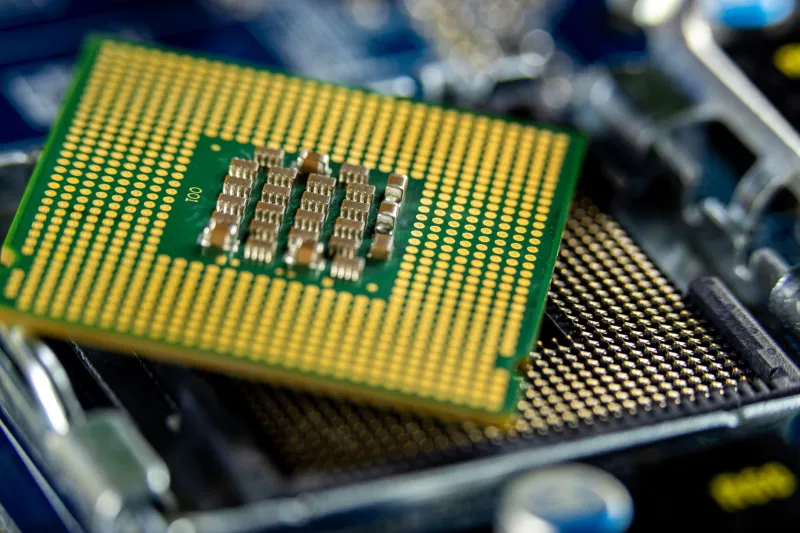
For years, the default architecture for AI-powered applications followed a familiar pattern: collect data on a device, ship it to the cloud, run inference on a remote server, and return a result. That model served its purpose when compute was scarce and connectivity was assumed. Today, both of those assumptions are eroding — and a new generation of edge-native AI deployments is filling the gap.
Edge intelligence, broadly defined as the practice of running machine learning inference directly on devices or local infrastructure rather than in centralized data centers, is no longer a niche research concept. It is rapidly becoming a production-grade discipline with measurable impact on latency, data governance, and system resilience. For engineering teams building the next wave of intelligent applications, understanding how to architect, optimize, and operate models at the edge is becoming an essential competency.
Why the Cloud-Centric Model Is Showing Its Limits
Cloud-based AI inference works well under controlled conditions. When bandwidth is abundant, latency tolerances are loose, and data sensitivity is low, routing requests through a remote API introduces acceptable tradeoffs. But those conditions are far from universal.
Consider an autonomous industrial robot operating on a factory floor in rural Ohio. A round-trip to a cloud inference endpoint — even under favorable network conditions — can introduce hundreds of milliseconds of delay. In environments where mechanical systems are responding to real-time sensor inputs, that latency is not merely inconvenient; it is operationally unsafe. Similarly, a retail analytics platform processing customer video feeds faces significant regulatory and reputational risk if raw footage transits public networks before any privacy-preserving processing occurs.
Beyond latency and privacy, there is the question of availability. Cloud-dependent systems inherit the failure modes of their upstream providers. Edge deployments, by contrast, can continue functioning through network outages, API disruptions, and regional cloud incidents — a resilience property that is increasingly valued in critical infrastructure contexts.
The Architecture of an Edge-First AI Stack
Transitioning from cloud-centric to edge-first AI requires rethinking the full deployment stack, not simply relocating a model binary.
Model Optimization as a First-Class Concern
Models trained in cloud environments are typically optimized for accuracy, not footprint. Deploying them at the edge demands a compression phase that balances predictive performance against hardware constraints. Techniques such as quantization — reducing the numerical precision of model weights from 32-bit floats to 8-bit integers — can shrink model size by a factor of four with minimal accuracy loss on many common tasks. Structured pruning, which removes redundant neurons and attention heads, offers further reductions. Frameworks such as TensorFlow Lite, ONNX Runtime, and PyTorch Mobile have matured significantly and provide production-ready pipelines for converting and validating compressed models across a range of target hardware.
Hardware-Aware Design
Edge hardware is not monolithic. A Raspberry Pi 5, an NVIDIA Jetson Orin, a Qualcomm AI 100, and a custom FPGA accelerator each present different compute profiles, memory ceilings, and power envelopes. Effective edge AI engineering begins with a rigorous hardware selection process tied to specific inference requirements. Teams should benchmark candidate hardware against representative workloads early, rather than treating hardware choice as a deployment-time detail.
Federated and Hybrid Deployment Patterns
Not every inference task belongs exclusively at the edge. A practical pattern emerging across enterprise environments is the tiered architecture: lightweight, latency-sensitive inferences execute locally on the device, while less time-critical tasks — model retraining, anomaly aggregation, audit logging — are handled by on-premises servers or cloud backends. This hybrid approach preserves the responsiveness and privacy benefits of edge inference while retaining centralized oversight and model lifecycle management.
Real-World Applications Driving Adoption
The clearest signal that edge AI has crossed from experimental to operational is the breadth of verticals now deploying it at scale.
In healthcare, medical device manufacturers are embedding diagnostic inference directly into imaging equipment. A portable ultrasound unit that can flag potential anomalies without transmitting patient data off-site addresses both HIPAA compliance requirements and the connectivity limitations common in rural clinical settings across the United States.
In agriculture, precision farming platforms are deploying computer vision models on drone hardware to assess crop health during aerial surveys. Processing imagery on the drone itself — rather than streaming raw video to a ground station — reduces bandwidth requirements by orders of magnitude and enables real-time flight path adjustments.
In retail and logistics, edge inference is powering inventory management systems that track stock levels via on-shelf cameras without routing footage through external servers. Several large US-based distribution centers have reported measurable reductions in shrinkage and restocking delays following edge AI deployments.
In autonomous vehicles and robotics, the case for edge inference is perhaps the most self-evident. Perception, obstacle detection, and path planning cannot tolerate network round-trips. Every major autonomous systems platform — from warehouse robots to agricultural machinery — runs its core inference stack on local hardware.
Security and Governance Considerations
Edge deployments introduce a distinct security posture that DevOps and security teams must account for explicitly. Models running on distributed devices are physically accessible in ways that cloud-hosted APIs are not. Adversarial model extraction, firmware tampering, and unauthorized inference access are all realistic threat vectors.
Mitigating these risks requires a layered approach. Secure boot and hardware attestation verify device integrity before models are loaded. Encrypted model storage prevents weight extraction by unauthorized parties. Differential privacy techniques can be applied during federated training to limit the information that local data contributes to globally shared model updates.
Governance frameworks should also address model versioning and update propagation. An edge fleet of thousands of devices requires a reliable over-the-air update mechanism with rollback capabilities — a requirement that maps naturally onto existing DevOps tooling such as container orchestration platforms adapted for constrained environments.
Practical Steps for Teams Beginning the Transition
For engineering organizations currently operating cloud-centric AI pipelines, the transition to edge-first architectures is best approached incrementally.
Begin by auditing existing inference workloads for latency sensitivity, data sensitivity, and connectivity dependency. Workloads that score high on any of these dimensions are strong candidates for edge migration. Next, establish a model optimization pipeline early — treating compression and hardware benchmarking as integral to the development process rather than post-training afterthoughts. Finally, invest in observability infrastructure that surfaces model performance metrics from distributed edge devices into a centralized monitoring plane, ensuring that operational visibility is not sacrificed in the move away from cloud-hosted inference.
The Broader Implication
Edge intelligence represents more than a shift in deployment topology. It reflects a maturing understanding within the engineering community that AI systems must be designed for the environments in which they actually operate — environments characterized by variable connectivity, strict latency budgets, and legitimate data privacy obligations. As hardware continues to advance and tooling ecosystems deepen, the question for most organizations will shift from whether to deploy AI at the edge to how quickly they can do so responsibly.